This data is from the NHTSA — the US gov't agency tasked with vehicle safety. Complaints are spread across multiple & redundant categories, & are not organized by problem.
So how do you find out what problems are occurring? For this NHTSA complaint data, the only way is to read through the comments below. Any duplicates or errors? It's not us.
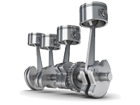
Engine coolant destroyed engine due to the degradation of upper intake mainifold materials around the egr stove pipe. Without warning(no warning lights went on) while on the road coolant entered the pistons through the degradated upper intake manifold and caused engine failure. This could have caused a major accident as power was lost and speed dramatically dropped. Seems to be obvious engine design flaw in 3800 V-6 engines produced by GM in Buick lasabres, riveras, regals, Oldsmobile 98S, 88S. Intrigue, Pontiac Bonneville, Grand Prix, & Chevrolet luminas, monte carlos over a period of years dating from 1995-1998 when they changed the manifold design. A service bulletin by GM #01-06-01-007A in July 18, 2001 indicated the GM is aware of defect and has since produced a different manifold to replace and repair problem but will not stand behind these engines when they fail without warning. GM has been uncooperative in this matter. All repairs to this car are documented with biliings, etc by certified GM service dept. Including oil changes and preventitive maintenance. This was a well maintained vehicle with a service history that can be documented. I have pictures of the inside of the engine where damage occurred.the GM service dept. That replaced damaged engine indicated that they had 3 other vehicles with the same engine damaged because of coolant leak through the degradation of the intake manifold in that one month time frame. This is a small dealership and they indicated that this was a indicator of a major problem with this component.
While driving at 70mph engine died. Contact dealer who replaced engine, in which a connect rod had broken. Consumer stated that the connect rod broke and destroyed the engine, crankshaft and A/C compressor.
Consumer had parked vehicle and it exploded as consumer was exiting vehicle, adjuster stated possible internal engine intake manifold to be cause, claim 05-4442-741.
Consumer started vehicle and heard a loud pop, flames came out from under the hood, the origin of the fire and explosion was inside the intake manifold of the engine, the cause of the fire was a backfire within the engine compartment, claim 17-9112-605.
Consumer started vehicle, there was a loud pop and then flames came out from under the hood, the origin of the fire and explosion is inside the intake manifold and the engine, the cause of the fire is a back fire within the engine compartment, claim 17-9112-605..
Consumer had parked vehicle and it exploded as consumer was exiting vehicle, adjuster stated possible internal engine intake manifold to be cause, claim 05-4442-741.
Consumer started vehicle and heard a loud pop, flames came out from under the hood, the origin of the fire and explosion was inside the intake manifold of the engine, the cause of the fire was a backfire within the engine compartment, claim 17-9112-605.
This 1997 Buick le sabre, in very good condition, exploded with a fireball and sending plastic "shrapnel" and engine cover parts out to a radius of 24 feet. Thank god none of the three people trying to start the car with the hood up were standing over the engine bay. The resulting repairs were $700 and my long time extremely competent group of mechanics were all baffled and could not explain why or how such a thing was even possible on such a system (I.e. late model fuel injection, starting a cold engine. Referenced in EA02-030
A D V E R T I S E M E N T S
- Tyler, MN, USA